Overview
What I remember most from every trip is the cemeteries, the cocktails, the food, the walking tours, and the fog sitting on the river in the morning. This is the list I send people when they tell me they’re going.
Most people stay in the French Quarter and never leave, which is a shame! The Quarter is worth a morning or two, but the Marigny, the Bywater, Tremé, Mid-City, Uptown, and the Warehouse District are where a lot of the best food and music is. Pick a neighborhood or two a day and actually walk them.
Neighborhoods
French Quarter. Walk it early, before the heat and the crowds, when the balconies and courtyards are quiet. Bourbon Street is a once-and-done.
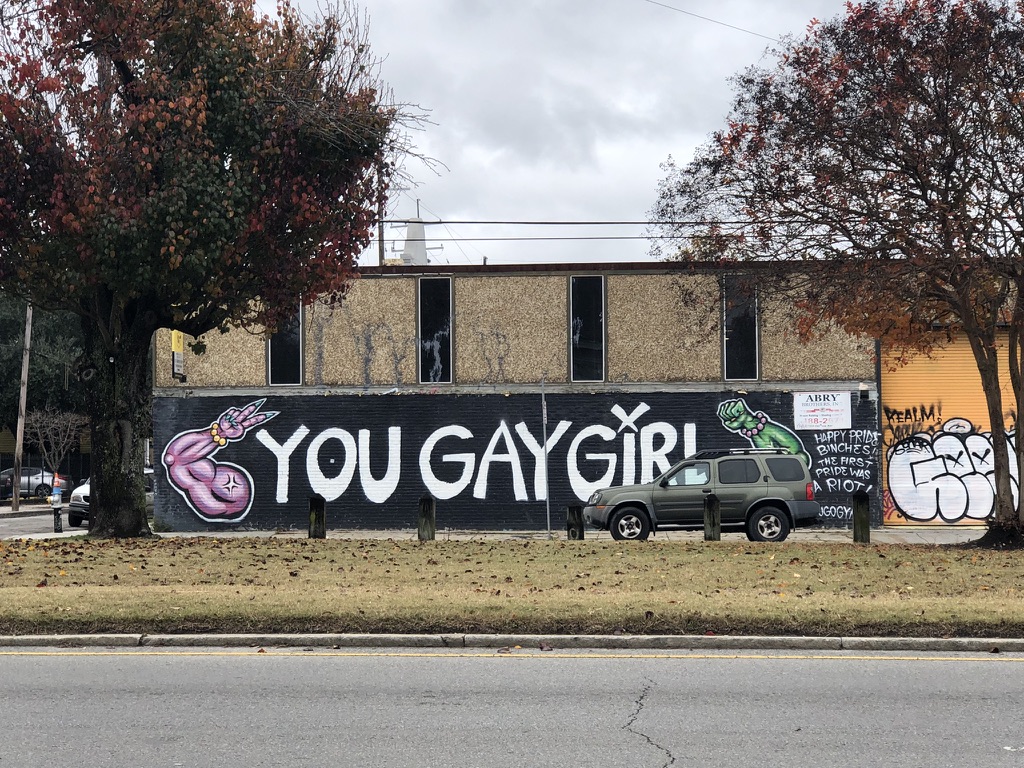
Marigny and Bywater are right downriver from the Quarter. Frenchmen Street has the music clubs, St. Claude Avenue has the cabaret and the weirder bars, and the Bywater has shotgun houses, murals, Crescent Park, and Bacchanal.
Tremé is the oldest Black neighborhood in the country, and a lot of what the city is known for comes from here: brass bands, second lines, Mardi Gras Indians. Come for Dooky Chase’s, Willie Mae’s, and the Backstreet Cultural Museum.
Warehouse District and CBD are where the city has been building up. Old cotton and coffee warehouses turned into lofts, galleries, and restaurants, and the old World Trade Center at the foot of Canal is a Four Seasons now. It’s also where the museums are.
Garden District and Uptown are the mansions and the oak trees. Ride the St. Charles streetcar out, walk the Garden District, then work your way down Magazine Street.
Mid-City is more residential, with Bayou St. John, City Park, and a bunch of the best casual restaurants in town.
Food & drink
The classics
Commander’s Palace (Garden District). The big turquoise house, doing Creole fine dining since 1893. Make a reservation, dress up a little, and walk the Garden District after. Legitimately good food, worth taking the streetcar to.
Dooky Chase’s (Tremé). Leah Chase’s restaurant, where civil rights organizers met over gumbo and fried chicken. Still family run, and a Michelin Bib Gourmand.
Willie Mae’s Scotch House (Tremé). The fried chicken everyone talks about. Go at an off hour.
Cochon (Warehouse District). Donald Link’s Cajun restaurant: rabbit and dumplings, boudin, a lot of pork. Bib Gourmand.
Cochon Butcher (Warehouse District). Cochon’s sandwich counter around the corner. Get the muffaletta.
Jacques-Imo’s (Uptown, Oak Street). Loud and cramped and fun. The shrimp and alligator sausage cheesecake sounds like a dare, order it anyway.
Po-boys and sandwiches
I love a po-boy. Fried food, sauce and good bread? You really can’t go wrong, but here are some of my favorites.
Domilise’s (Uptown). A corner po-boy shop that’s been around for about a century. Fried shrimp, dressed, with a Barq’s. Bib Gourmand.
Parkway Bakery & Tavern (Mid-City). Roast beef debris po-boy, then walk over to Bayou St. John.
Turkey and the Wolf (Irish Channel). Very silly sandwiches that are also very good. The fried bologna is the one. Bib Gourmand. They’ve got a great recipe book that I use all the time.
Liuzza’s by the Track (Mid-City, by the Fair Grounds). Neighborhood joint. BBQ shrimp po-boy and gumbo.
Warehouse District and the new stuff
Four Seasons (foot of Canal Street). The old World Trade Center tower, reopened as a hotel in 2021. You don’t have to stay there: Donald Link’s Chemin à la Mer and Alon Shaya’s Miss River are both inside, and Vue Orleans on top is an observation deck with the whole river bend below you.
Auction House Market (Warehouse District). A food hall in an old warehouse. Good for a group that can’t agree on anything (and I am typically traveling with a pack of homosexuals so…)
Bar Marilou (Warehouse District, inside Maison de la Luz). A dark, gorgeous little cocktail bar that looks like a library. Really, really great cocktails.
Peacock Room (CBD, Hotel Fontenot). Loud wallpaper and good drinks.
Espíritu Mezcalería (Warehouse District). A mezcal bar, which after Mexico City I am obviously going to point you to.
Kira Omakase (Warehouse District). New this year, haven’t been yet.
Hotel Saint Vincent (Lower Garden District). An old orphanage turned into a hotel, with Paradise Lounge and the Italian restaurant San Lorenzo inside. Worth a drink even if you’re not staying.
St. Roch Market (St. Claude). A restored 1870s market hall, now a food hall. Easy lunch before the cemetery down the street.
Beignets and coffee
Café du Monde (French Quarter). Yes, it’s touristy, do it anyway. Go late at night or really early when the line is short. Café au lait, an order of beignets, and powdered sugar on everything you’re wearing.
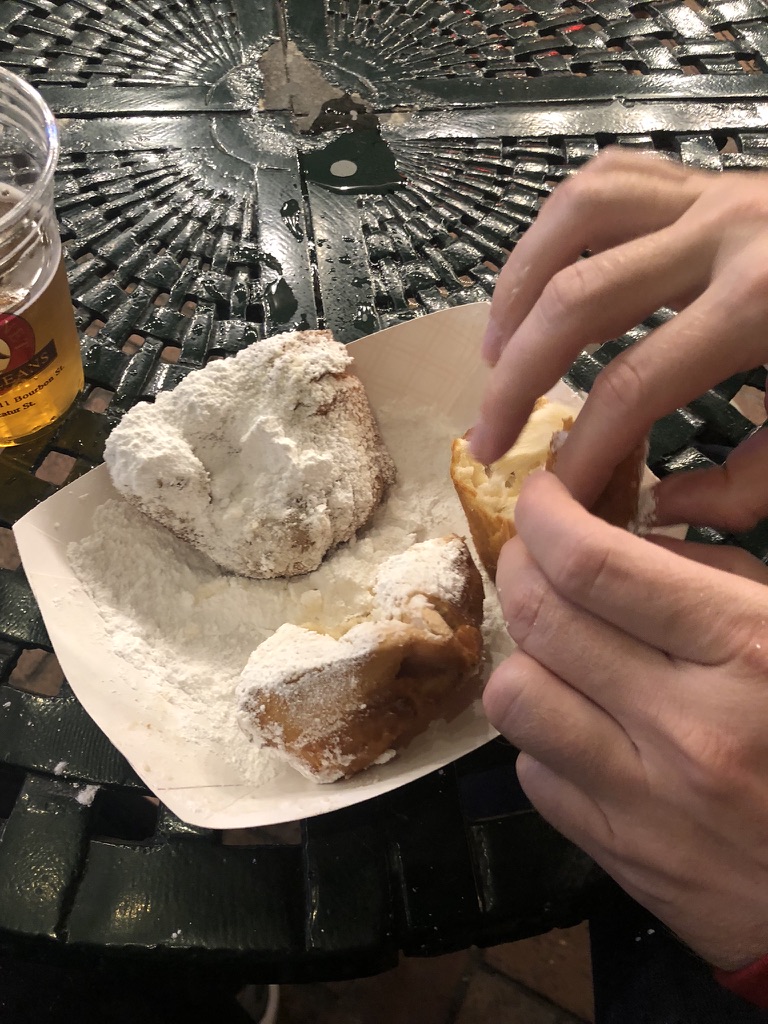
Morning Call (City Park). The beignets locals go to, in the middle of City Park. Walk the sculpture garden after.
The Michelin situation
The Michelin Guide added the American South in 2025, and New Orleans did really well (DUH). The 2026 list has four starred restaurants here and more Bib Gourmands than any other city in the guide. These are all on my list of places to go, hint hint.
Emeril’s (Warehouse District). Two stars. Emeril’s son E.J. Lagasse runs the kitchen now, and he’s the youngest chef ever to get two. This is the splurge.
Dakar NOLA. A Senegalese tasting menu, with its first star in 2026.
Zasu and Saint-Germain each kept their one star.
On my list
Pêche (Warehouse District). Whole grilled fish and a raw bar from the Cochon people.
Saba. Alon Shaya’s Israeli restaurant. Bib Gourmand.
Mister Mao. Calls itself a “tropical roadhouse,” and the menu goes everywhere. Bib Gourmand.
Cocktails
Jewel of the South (French Quarter). Chris Hannah’s bar, which World’s 50 Best has named the best bar in the South four years in a row. Get a brandy crusta, which was invented at the original Jewel of the South in the 1850s.
Cure (Freret Street, Uptown). The bar that helped bring Freret Street back. It jumped to #21 on North America’s 50 Best Bars this year.
Sazerac Bar (CBD, inside the Roosevelt). Have a Sazerac in the bar named after it. Art deco and murals.
Sazerac House (CBD, Canal at Magazine). A museum about New Orleans cocktails with tastings along the way. It’s free, but book a time.
Carousel Bar (French Quarter, Hotel Monteleone). The bar slowly spins. Order a Vieux Carré, which was invented here.
Lafitte’s Blacksmith Shop (Bourbon Street, the quiet end). Lit by candles, maybe the oldest bar in the country. If you’re only stopping at one bar on Bourbon, make it this one.
Music
Frenchmen Street (Marigny). Bounce between The Spotted Cat, d.b.a., and Snug Harbor, and hit the Frenchmen Art Market at night. Some clubs charge a cover, and the ones that don’t expect a drink per set.
Tipitina’s (Uptown). The club Professor Longhair called home. Check who’s playing and go.
Maple Leaf Bar (Uptown, Oak Street). A small, sweaty, late-night bar for brass bands and funk. Pairs well with dinner at Jacques-Imo’s down the street.
Howlin’ Wolf (Warehouse District). A bigger room for touring bands and local brass.
Chickie Wah Wah (Mid-City, on Canal). A listening room for roots, blues, and singer-songwriters.
Hi-Ho Lounge (St. Claude). A dive with bounce, brass, and whatever else is happening that night.
Kermit’s Tremé Mother-in-Law Lounge (Tremé). Kermit Ruffins’ neighborhood bar. Cheap drinks and a local crowd.
Bacchanal (Bywater). Pick a bottle in the wine shop, carry it out back, and sit in the yard while a band plays.
Preservation Hall (French Quarter). The one Quarter music spot I’d keep. A small hot room, traditional New Orleans jazz, short sets, no bar. Buy tickets ahead.
Theatre & cabaret
AllWays Lounge & Cabaret (St. Claude, Marigny). Burlesque, drag, comedy, and circus acts, in the main room or the tiny Twilight Room around the side. Queer, weird, 21 and up. I have memories of stumbling into the AllWays more than once, and it’s just such a cool spot. CIRCUS ACTS. Check the calendar and go late.
Marigny Opera House (Marigny). A deconsecrated church that hosts dance, chamber music, and opera.
Southern Rep Theatre (Bayou Road). The city’s main company for new plays.
Saenger Theatre (Canal Street). The big 1920s movie palace, with stars on the ceiling. Broadway tours play here.
Orpheum Theater (CBD). Home of the Louisiana Philharmonic, and it hosts concerts too.
The Broadside (Mid-City). An outdoor stage and screen next to the Broad Theater, with movies, bands, and drinks in the yard.
Cemeteries
The water table is too high to bury anyone, so New Orleans puts its dead above ground, in whitewashed tombs lined up like little streets. Do not skip these, seriously. They are soooooooooo spooky and cool.
St. Louis Cemetery No. 1 (Tremé edge). The oldest, from 1789. Marie Laveau’s tomb is here, along with the white pyramid Nicolas Cage bought for himself. You can only get in with a licensed guide.
Lafayette Cemetery No. 1 (Garden District). Shaded by oaks, across the street from Commander’s Palace. It’s been closed for restoration on and off, so check before you go.
St. Roch Cemetery (St. Roch, just past the Marigny). The little chapel is full of things people left after praying to be healed: crutches, leg braces, glass eyes, plaster feet.
The Canal Street cemeteries (Mid-City). Ride the Canal streetcar to the end of the “Cemeteries” line and they’re all around you: Greenwood, Cypress Grove, and the huge Metairie Cemetery across the highway. Much quieter than the famous ones.
Save Our Cemeteries is the nonprofit that takes care of a lot of these, and they run tours.
Walking tours
Tour guides in New Orleans have to be licensed by the city, so ask. They are usually in these rough shapes, and I recommend doing at least one:
A ghost tour in the Quarter. Corny, but also a great way to learn the history of the buildings you’ve been walking past all day. Go after dark.
A cemetery tour. St. Louis No. 1 requires one anyway, and Save Our Cemeteries runs them.
A Garden District architecture tour. The houses, who built them, and how the American side of town tried to outdo the Creoles in the Quarter.
Things to do
Go to the river when it’s foggy. On a cool morning the fog sits on the Mississippi and the bridges disappear. Walk the Moonwalk by Jackson Square, take the Algiers ferry straight into it, or walk Crescent Park in the Bywater.
Second lines. Most Sundays from fall into spring, a social aid and pleasure club parades through the neighborhoods with a brass band, and anyone can follow along. WWOZ posts the schedule. Go to one!
Backstreet Cultural Museum (Tremé). Mardi Gras Indian suits, second line regalia, and jazz funeral history. Small, and you should go.
Congo Square (Louis Armstrong Park, Tremé). Where enslaved and free Africans gathered on Sundays to drum and dance, and a big part of where American music comes from.
National WWII Museum (Warehouse District). Huge. Give it half a day at least.
Ogden Museum of Southern Art and the Contemporary Arts Center (Warehouse District). A block apart, and a good way to hide from the hot part of the afternoon.
Crescent Park (Marigny and Bywater). A long riverfront park built on old wharves. Climb the big rusted arch bridge at Piety Street for the view.
City Park (Mid-City). Enormous old live oaks, NOMA, and the free sculpture garden. Beignets at Morning Call while you’re there.
Bayou St. John (Mid-City). Rent a kayak or just sit on the bank. Pairs well with Parkway.
Garden District walk. Take the St. Charles streetcar to Washington Avenue and wander. Lafayette Cemetery No. 1 and Commander’s Palace are on the same corner.
Mardi Gras World. The warehouse where they build the floats. Fun even if you never come for Carnival.
Algiers Point ferry. The ferry from the foot of Canal crosses the river in a few minutes and gives you the best view of the skyline. Walk the levee on the other side.
Magazine Street. About six miles of shops, bars, and restaurants. Pick a stretch.
A swamp tour! Most companies pick you up downtown and drive you out to the bayous for a boat ride with the alligators. If you’d rather do it yourself, the Barataria Preserve in Jean Lafitte National Historical Park has free boardwalk trails through the swamp, about half an hour south of the city.
Julia Street galleries (Warehouse District). The city’s gallery row, a couple of blocks from the Ogden and the CAC. Walk the strip and pop into whatever’s open.
Getting around
Walking covers the Quarter, the Marigny, and most of the Bywater.
The streetcar is cheap, and the St. Charles line is worth riding just to ride it: old wooden cars under the oaks, all the way Uptown. It’s slow. Use the Le Pass app for fares. It’s so cute.
Uber and Lyft both work fine for crossing town or getting home late.
You don’t need a car. Parking in the Quarter is miserable and the tickets are worse.
Pro tips
- Go-cups are legal. You can walk around with a drink in a plastic cup. Glass on the street will get you a ticket.
- Pick your season. Fall and spring are lovely. Summer is brutally hot and humid, and hurricane season runs June through November.
- Know the calendar. Mardi Gras and Jazz Fest are incredible, and hotel prices triple. Plan around them or plan for them.
- Do lunch at the fancy places. A lot of them do lunch for a lot less than dinner.
- Bring cash for music clubs, tipping the band, and po-boy shops that are still cash only.
- Decatur Street is torn up. A water main project has closed parts of it since 2025, and it already pushed out at least one historic restaurant. Expect detours on the river side of the Quarter.
Skip this
Lingering on Bourbon Street. Walk it once at night so you’ve seen it, then go to Frenchmen.
Hurricanes at Pat O’Brien’s. A sugar bomb in a souvenir glass. Get a Sazerac instead.
Waiting two hours anywhere. Willie Mae’s, Café du Monde, and Parkway all have off hours.
Places that closed. Café Sbisa (after 126 years) and Coquette both closed in 2026, and Palace Café on Canal is gone too. If an older guide sends you there, it’s out of date.